LS 5663 Module 3 (1/3)
Bibliography:
Cleary, Brian P., and Andy Rowland. Bow-Tie Pasta: Acrostic Poems. Millbrook Press, 2016.
Summary:
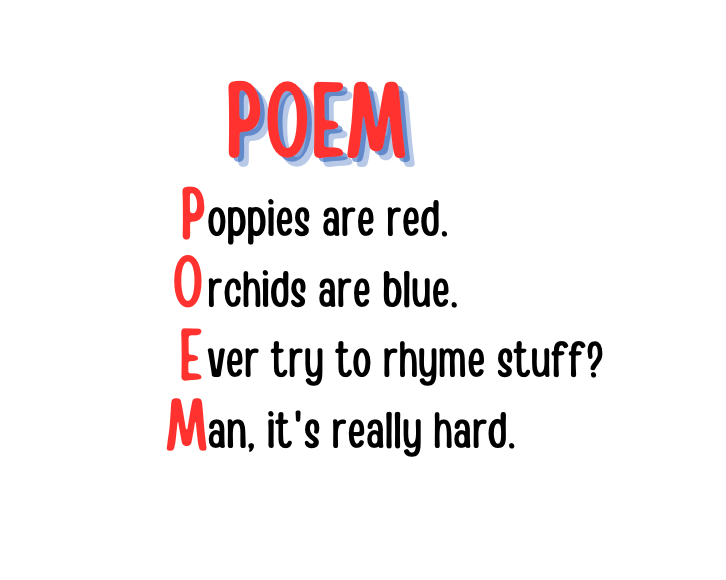
Bow-Tie Pasta is a very creative book filled with acrostic poems. This books will clearly show readers of all ages how fun these poems can be. The focus of each poem is written vertically down the side of a page. Each letter starts a phrase that creates the poem. Each page includes an illustration that reflects the silly poem. The 27 poems are listed on a table of contents and can be read out of order. The book could be enjoyed by readers of all ages but is most appropriate for grades 2-5.
Analysis:
Bow-Tie Pasta is a very eye catching book. The cover art features 3 children being served actual bow ties for dinner. The book is written by Brian Cleary and illustrated by Andy Rowland. Both Brian and Andy are drawn in a cartoonish fashion of the dedication page. There is a table of contents that list all 27 poems with their page numbers. The first things listed is an explanation of what an Acrostic poem is. The books ends with suggestions for further reading as well as websites to see other poems. Each poem is accompanied by a fun illustrations that capture the humor and creativity of the poem. What struck me the most id the length of each poem. I think sometimes students are taught acrostic poems as a mothers day of valentines day project. Often they are told that each letter of a word should be an adjective that describes the theme. In the book, the author often tells a story and highlights the letter of the main word he is using. I think elementary aged students will learn a lot about the variations of this type of poetry. One of my favorite poems is a silly shirt one that gives the kids permission to not focus on the rules.
Activity:
After reading the book a few times, point out the variations of poetry. Using those ideas integrate this poetry with a different subject area. For example, make a poem using a main character from a class book or a historical figure the class has been learning about. Have the students break into groups with different acrostic challenges. One group will make a poem describing the person with adjectives. Another group will use the same name but only use verbs. A third group will be challenged to describe an experience the person had using the same poetry formula. Compare all the poems.
 Li-Berry-ian